
Why SaaS Is Becoming the Standard in Engineering Simulation
Published on June 09, 2026 · 7 min read
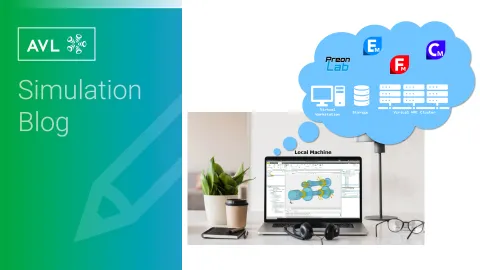
Traditional simulation environments require significant upfront investments in hardware, licenses, and IT infrastructure. These systems are typically dimensioned for peak workloads, leading to underutilized resources during normal operation. SaaS shifts this model by providing on-demand access to computing power, allowing engineering teams to dynamically allocate resources based on actual simulation needs. This not only reduces idle capacity but also eliminates the need for complex infrastructure planning and maintenance. As a result, simulation teams can operate more efficiently while maintaining access to high-performance capabilities when required. While these advantages primarily impact the technical operation of simulation environments, they also trigger a broader shift in how organizations manage simulation as a business capability.
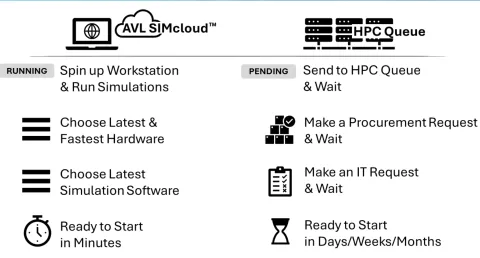
Closely related is the concept of scalability. Simulation workloads are inherently variable. At times, engineers require massive computing resources for complex models, while at other times, only minimal resources are needed. SaaS platforms provide elastic scalability, enabling users to access high-performance computing resources on demand. This dynamic scaling is difficult to achieve with fixed on-premise infrastructure.

Traditional simulation tools often involve complex installation procedures and steep learning curves. SaaS applications are pre-configured and ready to use, significantly reducing deployment time. New users can start working almost immediately, improving productivity and reducing training overhead.

With desktop software, organizations are responsible for updates, patches, and compatibility issues. This requires dedicated IT resources and often leads to outdated systems. SaaS shifts this responsibility to the provider, ensuring that users always have access to the latest features, performance improvements, and security updates.
Desktop applications are typically tied to specific machines or networks, limiting flexibility. SaaS solutions, on the other hand, are accessible from anywhere through a web browser, enabling distributed teams to collaborate seamlessly, regardless of location. Collaboration is fundamentally enhanced in a SaaS environment. Multiple users can work on the same project simultaneously, share results in real time, and integrate simulation data into broader workflows. This breaks down silos between departments and partners, accelerating innovation and decision-making.

The integration of advanced technologies such as artificial intelligence and machine learning is another factor accelerating SaaS adoption. Cloud platforms make it easier to process large datasets and train complex models, enabling more intelligent and automated simulation workflows. These capabilities are difficult to replicate in traditional desktop environments.
Security, once considered a barrier to cloud adoption, has evolved significantly. Modern cloud providers offer robust security frameworks, compliance certifications, and data protection mechanisms. In many cases, SaaS platforms now exceed the security capabilities of individual organizations managing their own infrastructure.
Beyond technical advantages, SaaS introduces a fundamental shift in how organizations think about simulation as a business capability. Instead of owning infrastructure and licenses, companies consume simulation resources as needed, aligning costs directly with project demand and business priorities. This transition from capital expenditure to operational expenditure reduces financial risk and improves budget predictability. More importantly, it enables organizations to respond more flexibly to changing market conditions, scaling simulation efforts up or down without long-term commitments. In this model, simulation becomes a strategic, on-demand capability rather than a fixed investment.
From a business perspective, SaaS fundamentally changes how organizations approach simulation. It lowers barriers to entry, allowing smaller companies and non-experts to access advanced simulation tools. At the same time, it empowers large enterprises to scale globally without being constrained by physical infrastructure. The broader market trends reinforce this transformation.
Cloud-based simulation is growing rapidly as organizations seek faster development cycles, reduced reliance on physical prototypes, and more efficient collaboration. The ability to run simulations virtually and iterate quickly has become a key competitive advantage in industries such as automotive, aerospace, and manufacturing. Ultimately, SaaS is not just a technological shift; it represents a new way of thinking about simulation. Instead of managing tools and infrastructure, engineers can focus entirely on solving complex problems and driving innovation.

In this context, AVL SIMcloud™ represents a modern SaaS solution specifically designed for engineering simulation. It combines on-demand scalability, transparent usage-based pricing, global accessibility, and integrated workflows into a single platform. By removing traditional barriers such as hardware limitations, licensing constraints, and IT complexity, SIMcloud enables organizations to fully leverage the benefits of SaaS and unlock new levels of efficiency and innovation in simulation. We will be writing more about features of the SIMcloud in our next blog article. So, stay tuned for more details.
Stay tuned
Don't miss the Simulation blog series. Sign up today and stay informed!
Read More About This Topic

Seamless access to AVL simulation tools and powerful hardware, directly in your web browser. Create virtual workstations and high-performance clusters with ready-to-use software.

With the 2025 R2 release, ChatSDT continues to evolve as your AI-powered customer support assistant, making interactions with the AVL Simulation Suite more intuitive and productive.
Stay tuned for the Simulation Blog
Don't miss the Simulation blog series. Sign up today and stay informed!