
Real-Time Fence-Line Monitoring of Hazardous Air Pollutants Using FTIR Spectroscopy
Published on April 02, 2026 · 9 min read
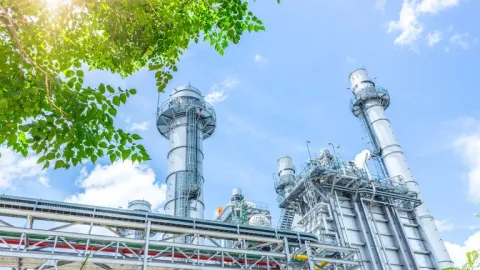
Fence-line monitoring refers to the measurement of hazardous pollutants along the perimeter of a facility. Its primary purpose is to detect emissions that escape beyond the facility boundary, providing both regulatory compliance data and actionable insights into emission sources. By placing monitoring systems at strategic points around a facility, operators can capture real-time data on fugitive emissions, identify emission "hot spots," and take corrective measures promptly.
Why Fence-Line Monitoring Matters
Fence-line monitoring serves multiple critical functions:
- Fugitive Emissions Control: Traditional stack monitoring captures only controlled emissions, leaving fugitive releases undetected. Fence-line monitoring addresses this gap by providing continuous data on unplanned emissions, enabling timely remediation.
- Regulatory Compliance: Governments increasingly require facilities to implement perimeter monitoring. In the United States, for example, the Environmental Protection Agency’s (EPA) 2024 Hazardous Organic NESHAP (HON) Rule mandates fenceline monitoring for ethylene oxide and other key HAPs.
- Community Engagement: Transparent reporting of fence-line emissions helps build trust with surrounding communities, ensuring public health concerns are addressed proactively.
- Problem Identification: By highlighting where pollutant concentrations are highest, fence-line monitoring informs maintenance and process improvements, helping to prevent recurring emissions.
United States
The 2024 EPA HON Rule represents a significant step forward in regulating hazardous air pollutants. Targeting sectors such as organic chemical and polymer manufacturing, the rule specifies mandatory monitoring for substances including chloroprene, benzene, 1,3-butadiene, vinyl chloride, ethylene dichloride, and ethylene oxide.
Under the HON Rule, facilities must begin fenceline monitoring for EtO by July 15, 2026. The default method, EPA Method 327, requires 24-hour sample collection every five days using SUMMA canisters placed at eight evenly spaced points along the perimeter. Key action levels are set at 0.2 µg/m³ (annual rolling average) and 100 ppb (8-hour time-weighted average).
While Method 327 provides baseline compliance, it has limitations: it cannot identify the source of emissions in real-time, offers no insight into temporal emission patterns, and leaves spatial gaps between measurement points. Consequently, the regulation encourages adoption of real-time monitoring technologies, which provide more detailed and actionable data.
Europe
Fence-line monitoring is not yet universally mandated across European Union member states. Existing regulations focus primarily on worker protection and occupational exposure, rather than ambient perimeter monitoring. Key directives include:
- Directive 89/391/EEC: General workplace health and safety
- Directive 98/24/EC: Chemical agent risk assessment
- Directive 2004/37/EC: Protection against carcinogens, mutagens, and reprotoxic substances
Despite the lack of explicit perimeter monitoring mandates, voluntary initiatives often cover benzene, toluene, ethylbenzene, xylenes (BTEX), and other high-risk compounds in industrial facilities. This regulatory environment, combined with growing societal pressure for environmental transparency, underscores the need for robust monitoring strategies.
Traditional time-integrated sampling, such as EPA Method 327, captures only periodic snapshots of emissions. While it provides a measure of compliance, several challenges remain:
- Lack of Temporal Resolution: Emission events may be short-lived or intermittent, leaving gaps in the dataset.
- Limited Spatial Insight: Fixed sample points cannot fully capture heterogeneous emissions across a perimeter.
- Inability to Investigate Causes: Time-integrated methods cannot pinpoint the source or timing of fugitive emissions.
- Delayed Response: Sample collection, transport, and laboratory analysis introduce latency, reducing the opportunity for real-time intervention.
These limitations drive the adoption of real-time, continuous monitoring solutions, which can provide immediate alerts, actionable intelligence, and comprehensive spatial coverage.
Several technologies are available for real-time fence-line monitoring:
- Selected Ion Flow Tube Mass Spectrometry (SIFT-MS): Provides rapid, direct quantification of volatile organic compounds and other gaseous pollutants with high precision.
- Cavity Ring-Down Spectroscopy (CRDS): Utilizes optical cavities for ultra-sensitive detection of specific gases, ideal for trace-level measurements.
- Tunable Diode Laser Absorption Spectroscopy (TDLAS): Offers fast, compound-specific measurements, particularly suitable for gases like methane, ammonia, or ethylene oxide.
- Fourier Transform Infrared (FTIR) Spectroscopy: Enables simultaneous, multi-component detection of a wide range of HAPs, providing a comprehensive picture of facility emissions in real time.
Benefits of Deploying AVL FTIR Solutions for HAP Monitoring
- Multicomponent Capability: Simultaneous measurement of numerous hazardous compounds.
- Multistream Functionality: Sequential sampling from several monitoring points for broad spatial coverage.
- EPA PS 19 Compliance: Meets U.S. performance standards for instrumental methods.
- High Sensitivity: Detects pollutant concentrations down to levels mandated by current and upcoming legislation.
- Fast Response: Enables early warning of fugitive emissions and real-time leak detection, supporting proactive environmental management.
AVL has developed a range of FTIR-based systems designed to meet the demands of real-time fence-line monitoring:
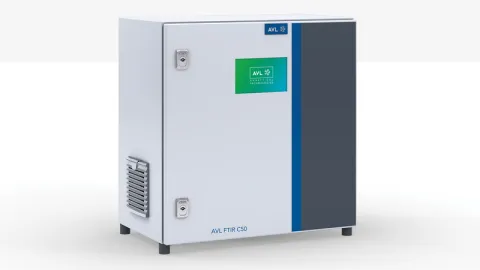
AVL FTIR C50
- Industrial, wall-mounted system suitable for outdoor or sheltered installations
- Supports up to four sequential sample streams with continuous measurements
- 12–14 minute measurement cycle for four streams
- Equipped with HVAC and purging capabilities to maintain accuracy in harsh conditions
AVL PA-FTIR C50
- Compact, portable device for spot-checks or mobile surveys
- 90-second measurement cycle
- Usable both indoors and outdoors
- Backpack-compatible for flexible deployment
Both systems are capable of measuring multiple HAPs, including EtO, at concentrations well below regulatory action levels. Their robust design ensures long-term reliability, and the same hardware platform supports both stationary and portable applications, simplifying operation and maintenance.
In a feasibility study, AVL’s FTIR systems successfully covered eight perimeter points, demonstrating rapid detection and spatial mapping of EtO concentrations. Continuous real-time measurements enabled the identification of emission hot spots that would have remained undetected using traditional time-integrated sampling.
The advantages are clear:
- Compliance: Ability to meet EPA action levels and regulatory requirements
- Speed: Fast measurement cycles allow near-real-time alerts
- Robustness: Purging and pressure regulation maintain measurement integrity
- Versatility: Suitable for indoor, outdoor, stationary, and mobile applications
- Ease of Use: Identical hardware and user-friendly web interface across all deployment modes
Fence-line monitoring is increasingly critical for the control of hazardous air pollutants, regulatory compliance, and community transparency. Traditional time-integrated sampling methods, while necessary for baseline compliance, cannot provide the temporal and spatial resolution needed to fully understand and mitigate fugitive emissions. Real-time monitoring, particularly using FTIR spectroscopy, offers a powerful solution: rapid detection, multi-component analysis, and operational flexibility.
With regulatory frameworks such as the EPA HON Rule 2024 emphasizing stricter control of ethylene oxide and other HAPs, industrial facilities must adopt advanced monitoring strategies. AVL’s FTIR solutions exemplify the capabilities required to meet these challenges, providing accurate, fast, and versatile measurement for both stationary and portable applications.
By integrating real-time fence-line monitoring into environmental management strategies, industries can not only comply with regulations but also proactively protect human health and the environment, fostering trust with regulators and surrounding communities alike.