
Software Releases Are Your New Benchmark
BEV has fundamentally transformed the way vehicles are developed. By prioritizing a software-first methodology, the entire process has been turned on its head. In this new approach, software becomes the mind of a vehicle – and hardware the supporting pillar. This transformation puts flexibility in your hands, helping you meet shifting end user demands with ease. And with software taking the lead, countless over-the-air updates are part of everyday business, demanding real-time adaption, testing, and delivery. To stay competitive, you need automation and standardization – and a tool that fits your workflows instead of disrupting them. AVL’s sophisticated software solution plugs into your IT landscape, scales with your needs, and brings compliance by design across your entire vehicle fleet. You stay in control. Your teams stay focused. Trusted by 25,000+ users worldwide – we’re making software releases effortless for you.
Sync Software and Calibration Cycles – Let’s Release

In the past, monthly release cycles provided calibration engineers with sufficient time to absorb new software. The software was integrated, datasets were stabilized, and validation could occur at a measured pace. This process fit the slower evolution of earlier automotive systems. Today, however, the picture has changed. Agile methods and CI/CD practices have dramatically shortened delivery timelines. While software teams can release updates daily, calibration tasks – spanning variant integration, parameter adjustment, and dataset verification – remain tied to longer rhythms. This creates friction and undermines overall development speed.
Integrate Disciplines for High-Frequency Updates – Let’s Release!

This mismatch is more than a matter of timing; it reflects two separate cultures. Software development thrives on automation, pipelines, and rapid iteration. Calibration engineering depends on domain knowledge, measurement data, and careful adjustment across variants. Without a mechanism to connect these approaches, expectations diverge. Developers assume quick turnaround, while calibration engineers manage complex, resource‑intensive tasks. The result is miscommunication and delayed issue discovery, raising costs and eroding confidence.
Build the Bridge – Let’s Release
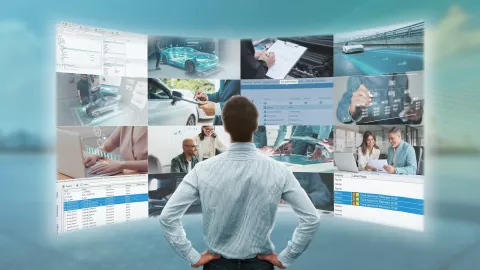
The cornerstone of alignment is dataset management. Instead of manual handovers, CI/CD pipelines should automatically transfer qualified releases into the calibration system. A Git integration of the dataset management tool allows easy setup of calibration CI/CD pipelines built with industry-standard tools such as GitHub, which can automate workflows and leverage virtualization. Results are visible directly next to datasets, ensuring calibration engineers stay in their familiar environment while DevOps engineers leverage automation. This creates a foundation for faster cycles without sacrificing quality.
Meet Industry Standards and Regulations – Let’s Release
Accelerating releases does not remove compliance requirements. Information security (ISO 27001, TISAX), functional safety (ISO 26262), and software update management (UNECE R.156) all demand traceability, safety checks, and documentation. Dataset management must embed these processes: Parameter changes trigger automated criticality checks, documentation is enforced, and review/approval steps can be configured. With compliance integrated into workflows, organizations achieve agility with confidence – delivering faster, safer, and fully auditable updates that meet both engineering and regulatory demands.


Let us know how we can support you
Explore Our Software

CRETA is a calibration data lifecycle management system designed for the calibration of all vehicle control units.