AVL FIRE™ M is a 3D Computational Fluid Dynamics (CFD) simulation software designed to digitally engineer complex flow-driven systems in the face of increasing time and cost pressures. As product complexity grows across all industry areas including powertrain, and energy applications, simulation engineers need validated CFD tools that support accurate design decisions from early development stages onward.
To tackle the connected challenges, FIRE M provides a comprehensive set of well documented and validated physical and numerical models covering fluid flow, heat transfer, combustion, multiphase flow, and reactive processes. All models are proven against experimental data, reducing uncertainty when applying simulation in production development.
GUI-guided workflows accelerate model setup, result analysis, and reporting, while user coding interfaces preserve full flexibility for custom model development. Integrated into the AVL Simulation Desktop (SDT) alongside AVL CRUISE™ M and AVL EXCITE™ M, FIRE M supports model parameterization, Design Of Experiments (DOE), and numerical optimization, with access to material databases, open APIs, and AI-assisted interaction.
FIRE M delivers measurable efficiency gains across all phases of a CFD simulation workflow – from initial model setup through post-processing and reporting.
- An intuitive graphical user interface minimizes onboarding time and supports efficient day-to-day operation for simulation engineers at all experience levels.
- Guided workflows and application-specific templates enable robust, repeatable setup of complex CFD simulations with reduced manual effort.
- An extensive material and property database provides data for gases, liquids, and solid materials.
- A comprehensive physical and numerical model library supports scalable simulation fidelity – from early concept studies to high-resolution analysis.
- MPI parallelized high performance solvers reduce computation time and optimize memory usage at scale.
- GPU acceleration for selected applications provides additional performance for demanding simulation tasks.
FIRE M supports high-fidelity CFD simulation across industries where fluid flow, heat transfer, and chemical reactions are engineering-critical design factors. The software's validated physical model library, scalable parallelization, and application-specific workflows make it applicable across a broad spectrum of engineering domains, including automotive powertrain and thermal management, aerospace propulsion, industrial energy systems, and marine. FIRE M enables engineers in each industry to virtually resolve complex flow, reducing reliance on hardware testing and supporting faster, more confident design decisions.
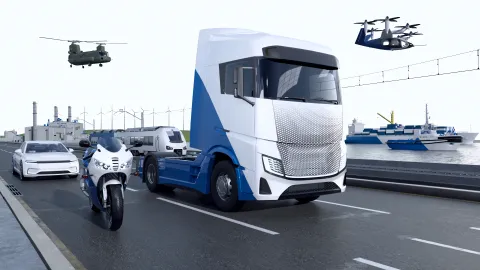
CFD for ICE-based and electrified powertrains and aerodynamics for on and off-road mobility
CFD for ICE-based and electrified powertrains for aero vehicles
CFD for fuel cells and electrolyzers, wind turbined and gensets
Marine
CFD for ICE-based and electrified powertrains for maritime applications
Rail
CFD for ICE-based and electrified powertrains and aerodynamics for rail applications
CFD for propulsion, thermal, and safety applications
AVL FIRE M covers a broad range of engineering application areas where high-fidelity CFD simulation of fluid flow, heat transfer, and reactive processes is required.
Battery
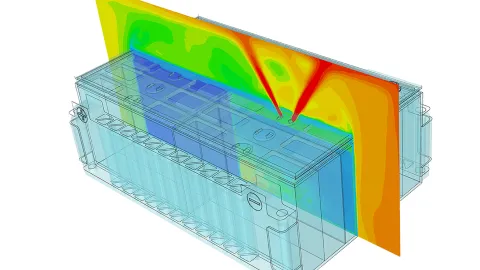
CFD simulation of battery systems covers electro-chemistry, heat generation and dissipation at cell, module, and pack level, coolant flow, structural temperature, thermal runaway, and cell-to-cell failure propagation.
E-Motor
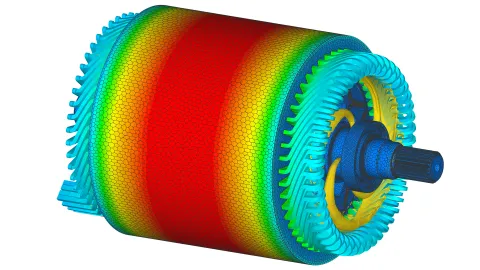
CFD simulation of electric motors covers electromagnetic forces and torques and electric and magnetic loss calculation, coupled with cooling flow analysis and thermal load management across all motor components.
Electrolyzer
CFD simulation of electrolyzers covers fluid flow, heat and mass transfer, and electrochemical reactions across flow field channels, porous transport layers, and membrane electrode assemblies.
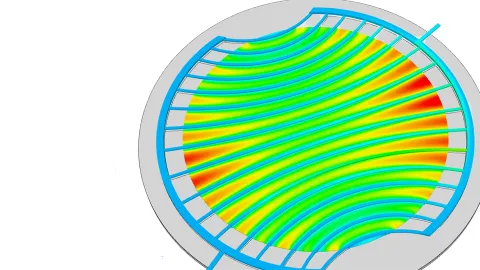
Fuel Cell
CFD simulation of fuel cells resolves coupled fluid flow, heat and mass transfer, electrochemical reactions, degradation and water management across flow field channels, gas diffusion layers, and membrane electrode assemblies.
Internal Combustion Engine (ICE)
CFD simulation of internal combustion engines covers the air path incl. turbo / super charging and crankcase ventilation, fuel supply / fuel injection, air/ fuel mixing, wallfilm, combustion, pollutant formation, exhaust aftertreatment and thermal load analysis.
Vehicle
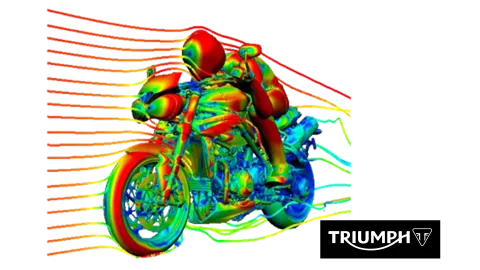
CFD simulation of vehicles covers external aerodynamics, the analysis of drag, lift, forces and moments, fluid flow in HVAC components, cabin internal airflow and passenger comfort, cooling system performance and engine compartment thermal management.
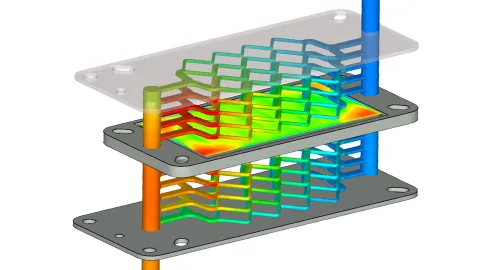
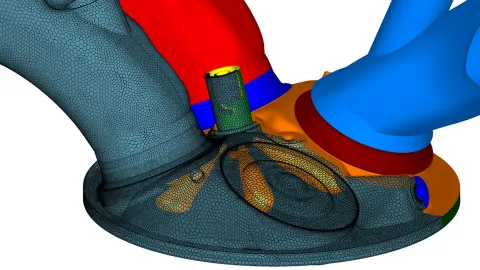
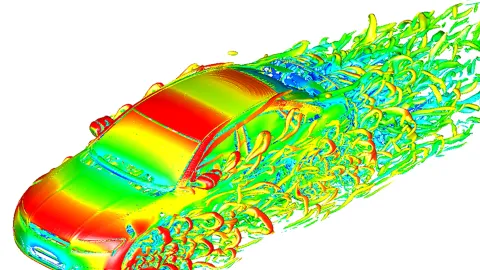
FIRE M provides a complete CFD simulation environment covering the entire workflow from CAD import, repair, and manipulation through model setup, solver execution, and result analysis to automated reporting. A broad physical model library addresses a wide spectrum of applications, while a user coding interface and the AVL Simulation Desktop (SDT) API allow engineers to extend and customize the software to meet application-specific requirements. FIRE M is particularly recognized for the fidelity and validation depth of its physical models.
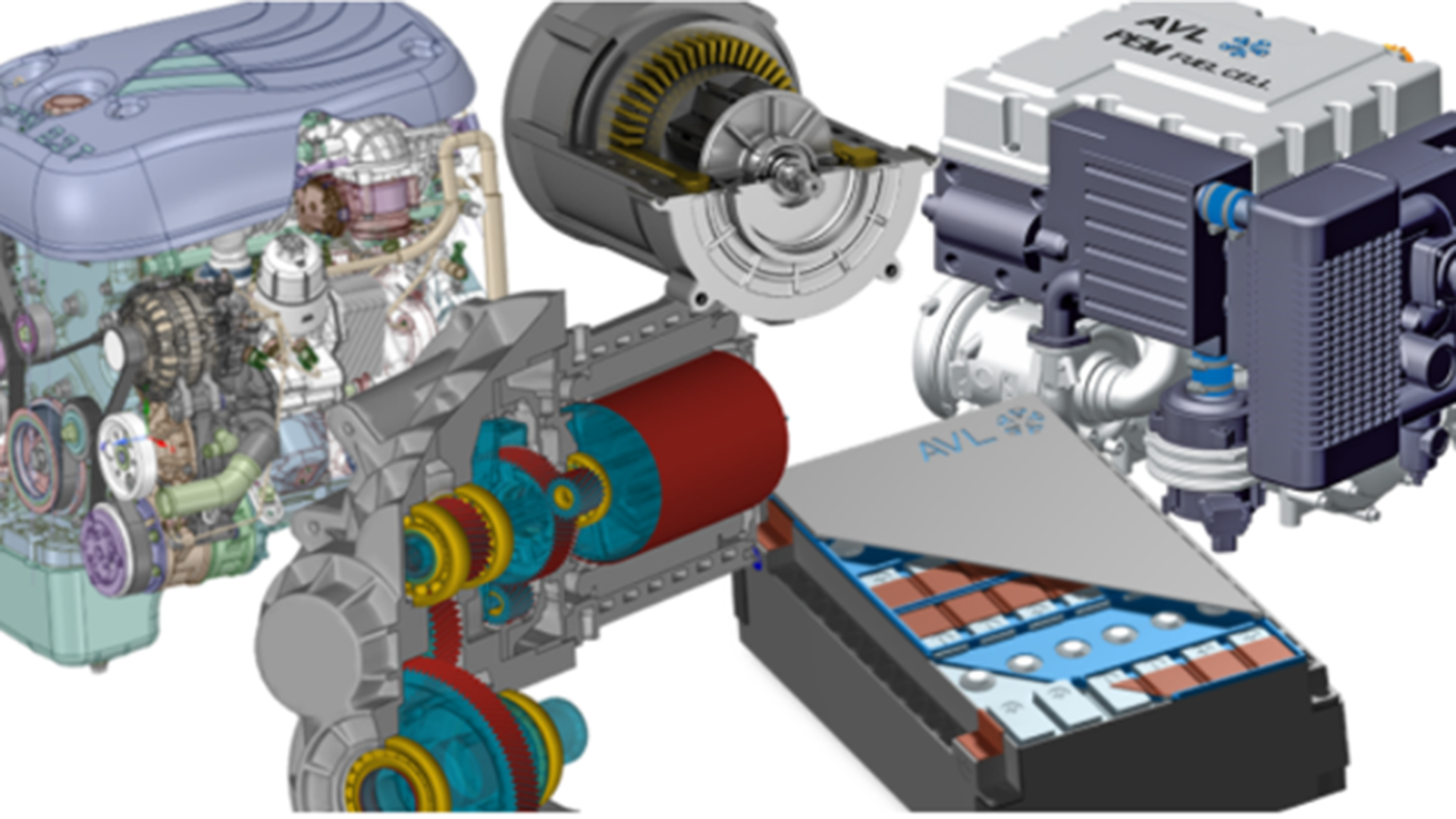
CAD Import, Repair, and Manipulation – SHAPE
FIRE M includes SHAPE, a specialized component for importing, repairing, and editing geometry data as part of the CFD preprocessing workflow. SHAPE can read all common native and standardized CAD exchange formats. It provides tools for editing imported geometries, such as removing parts, closing gaps, and adjusting dimensions. This way geometries can be readily prepared for model generation without the need for external CAD software.
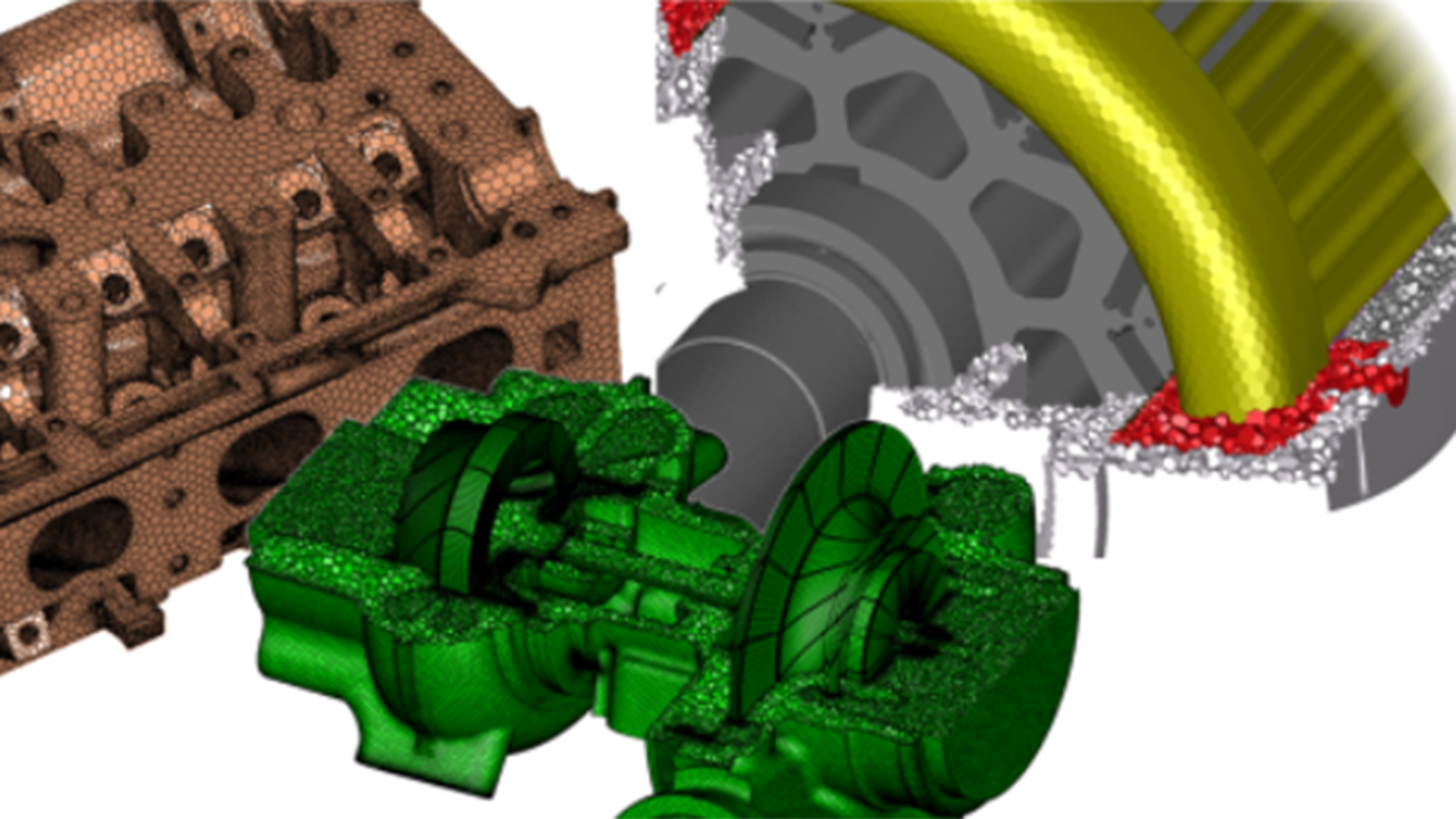
Computational Grid Generation – FAME
FIRE M includes FAME, a dedicated pre-processor for discretizing fluid and structural domains. Automated meshing approaches produce polyhedron-, hexahedron-, or tetrahedron-dominated grids with native boundary layers, while an interactive block-structured grid modeler is available for users who want to retain control over the mesh topology.
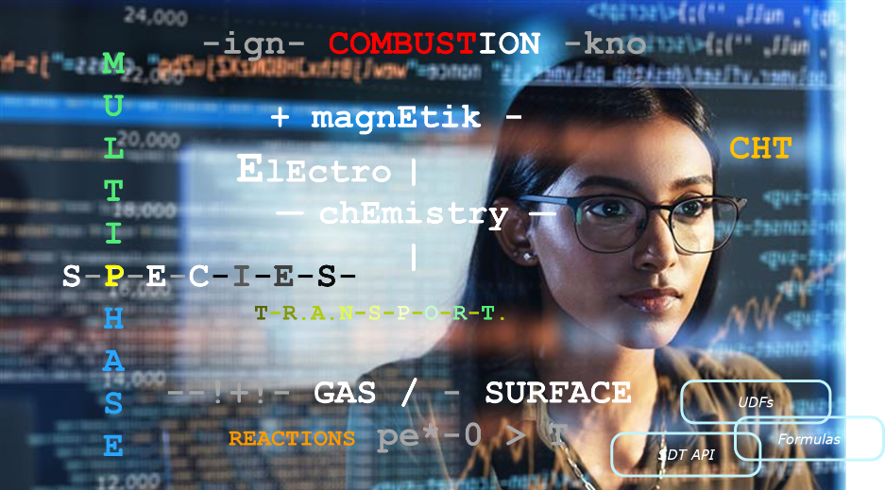
CFD Solver Capabilities – Chemistry, Physics, Parallelization, and Scalability
FIRE M's solver covers a broad physics spectrum including steady and transient, compressible and incompressible, laminar and turbulent, sub- to supersonic, reactive and non-reactive flows, heat transfer, species transport, electrochemistry, electromagnetics, and single- and multiphase flow. Full MPI parallelization and GPU support ensure computational efficiency at scale, while model parameterization enables straightforward integration into case studies and optimization loops.
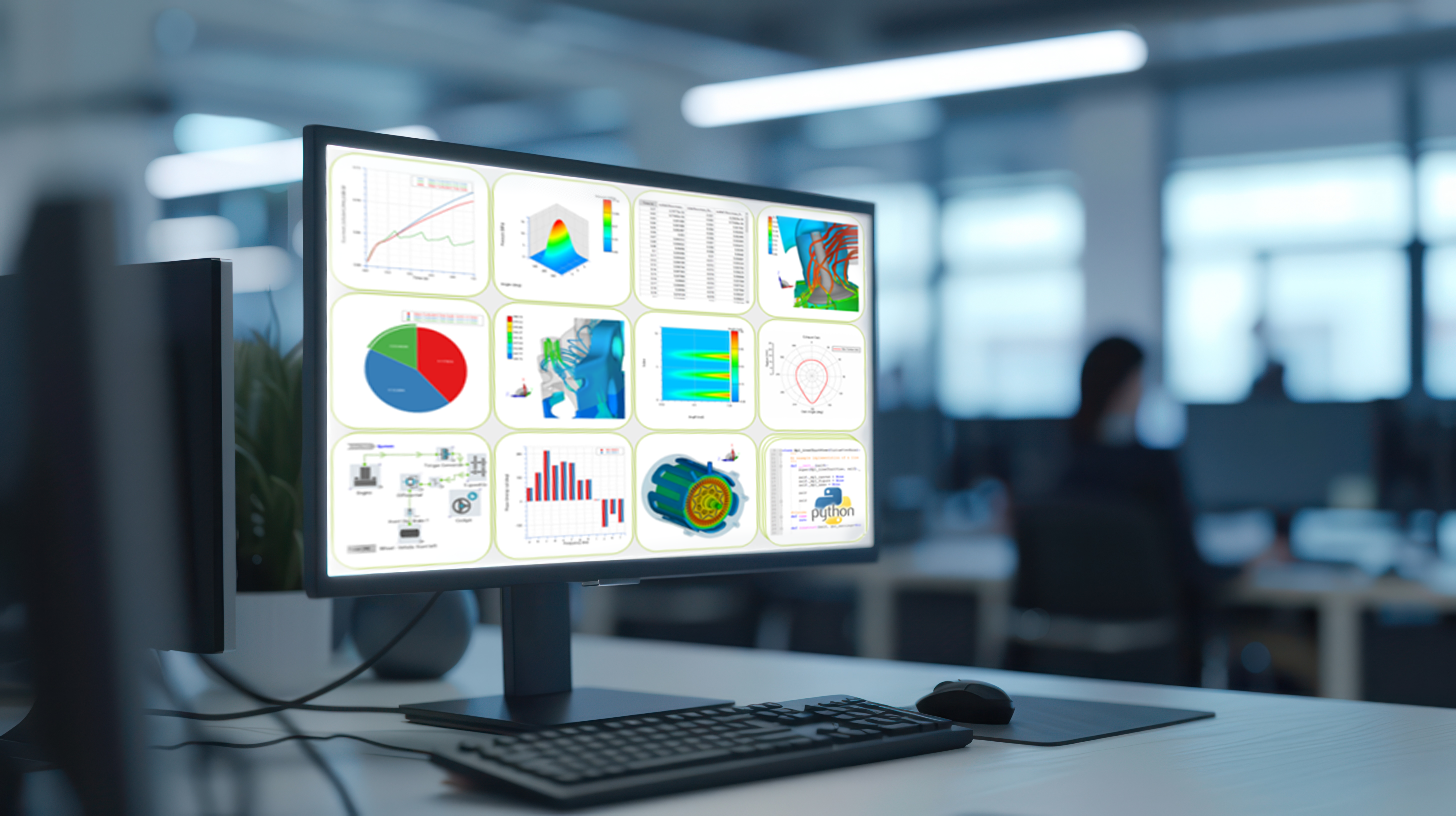
CFD Post-Processing, Visualization, and Reporting – IMPRESS M
FIRE M includes IMPRESS M, a dedicated post-processor for visualizing, analyzing, and reporting results from CFD, multi-body dynamics (MBD), and system simulations. Scalar, curve, and surface charts, colored surface plots, plane cuts, point clouds, and streamlines enable a detailed interpretation of the results, while the comparison of multiple cases, the export of static images and animations, and template-based automatic reporting in PDF or PPTX format complete the workflow.
Generative AI and LLM Interaction for AVL Simulation Software – ChatSDT
FIRE M's integration into the AVL Simulation Desktop provides access to ChatSDT, AVL's generative AI interface for software interaction. Engineers can query general and domain-specific knowledge via natural language, receive model setup guidance, and generate scripts for simulation setup, execution, and analysis — reducing onboarding time and manual effort for both experienced engineers and simulation newcomers.

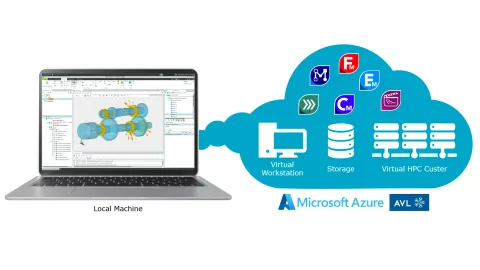
On-Demand Cloud HPC Resources for CFD Simulation – AVL SIMcloud™
SIMcloud provides an on-demand simulation environment for compute-intensive CFD workloads, offering scalable HPC clusters, virtual workstations with pre-installed software, and cloud storage for data transfer and sharing. Usage-based licensing, global accessibility, built-in collaboration tools, and automated software and hardware updates eliminate infrastructure overhead for engineering teams.
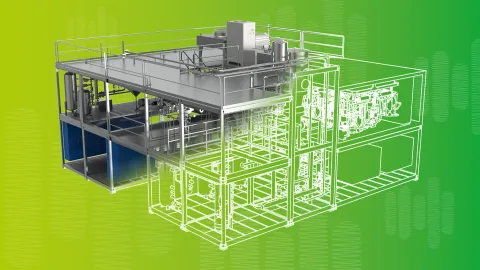
Achieving carbon neutrality requires a fundamental transformation in how energy is produced, stored, and used. Green hydrogen – produced via renewable-powered electrolysis – is emerging as a key enabler of this transition.

Brake systems are facing a new set of engineering demands. With the introduction of EU regulations on non-exhaust brake emissions, increasing complexity from modern drivetrains, and rising expectations for comfort and smooth brake blending, traditional test-heavy development approaches are no longer enough.

As PEM fuel cells move to the forefront of heavy-duty transportation and aviation, development teams are under growing pressure to deliver systems that meet ambitious performance, durability, and efficiency targets.

Join us for the second SIMpulse event on the topic of the internal combustion engine (ICE), where you will again experience exciting presentations and discussions on the future of the ICE and how simulation can help shape it.

Electrolyzers – the technology at the heart of green hydrogen production – are currently in the focus of intense research and innovation activities, aiming at increased efficiency, minimized performance loss over time, and reducing development effort and time to market.
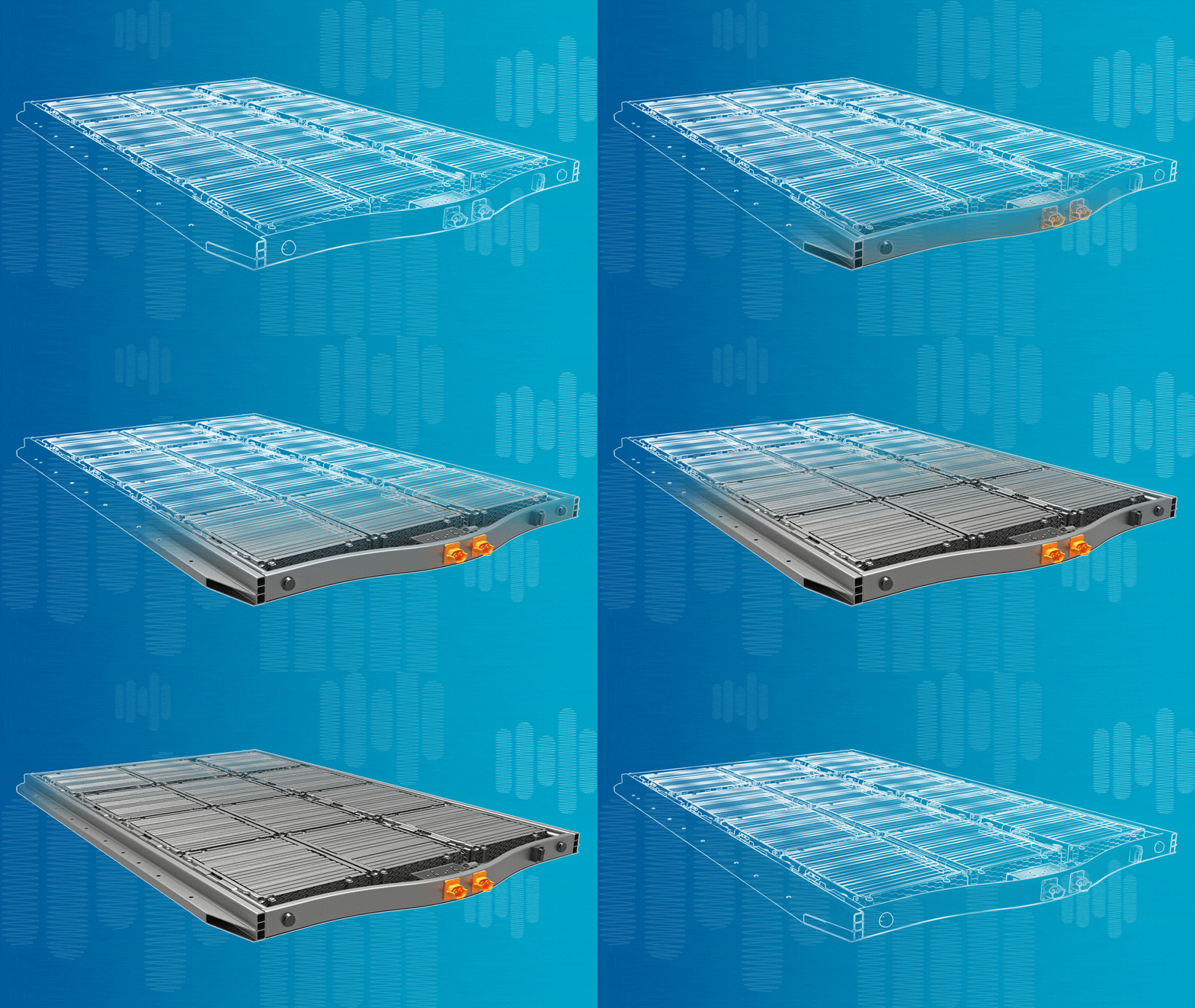
In many markets, battery electric vehicles have yet to achieve the same level of acceptance as combustion engine vehicles. To make them more competitive, it is essential to reduce the cost of EVs and build confidence in their safety.
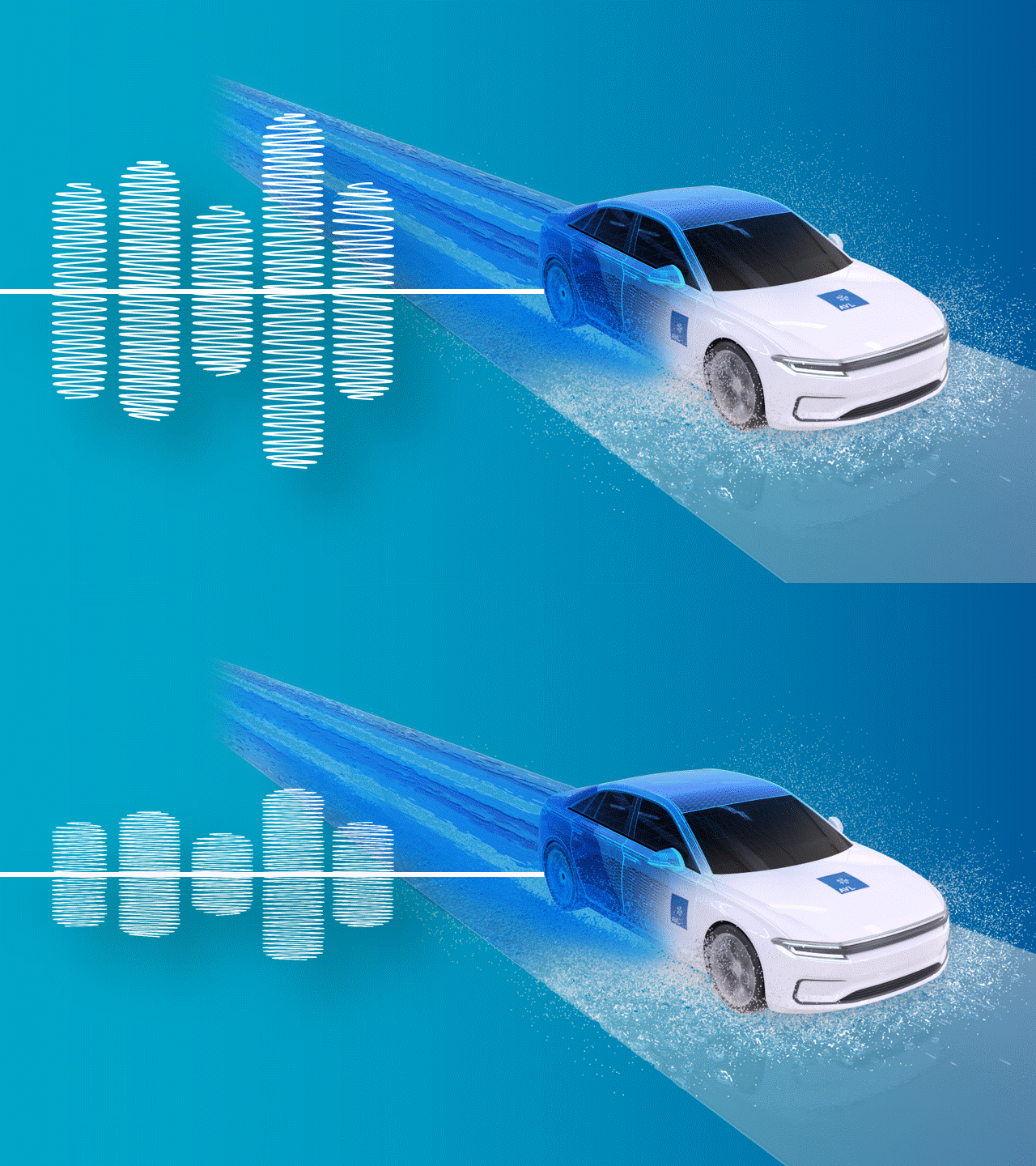
Electric mobility and autonomous driving are changing vehicle design requirements. Water management, vehicle and sensor soiling and aeroacoustics is becoming increasingly important. During our event we will discuss how innovative simulation technologies are accelerating development and optimizing vehicle design.
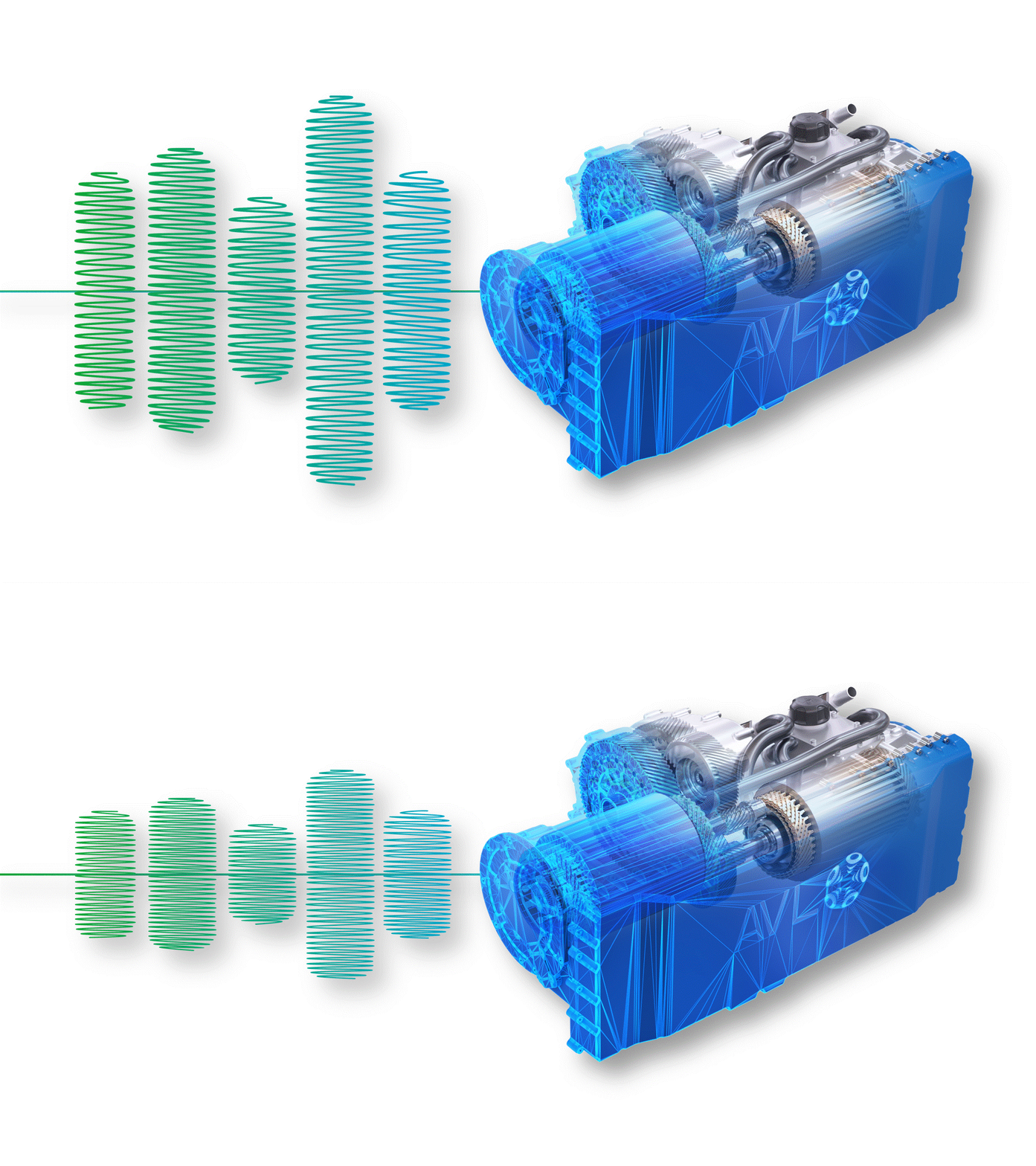
The fourth part of this online event series focuses on AVL's simulation solution for electric drive development. Learn about the opportunities that virtualizing can provide. Especially when it comes to using a consistent set of simulation tools for a streamlined workflow.
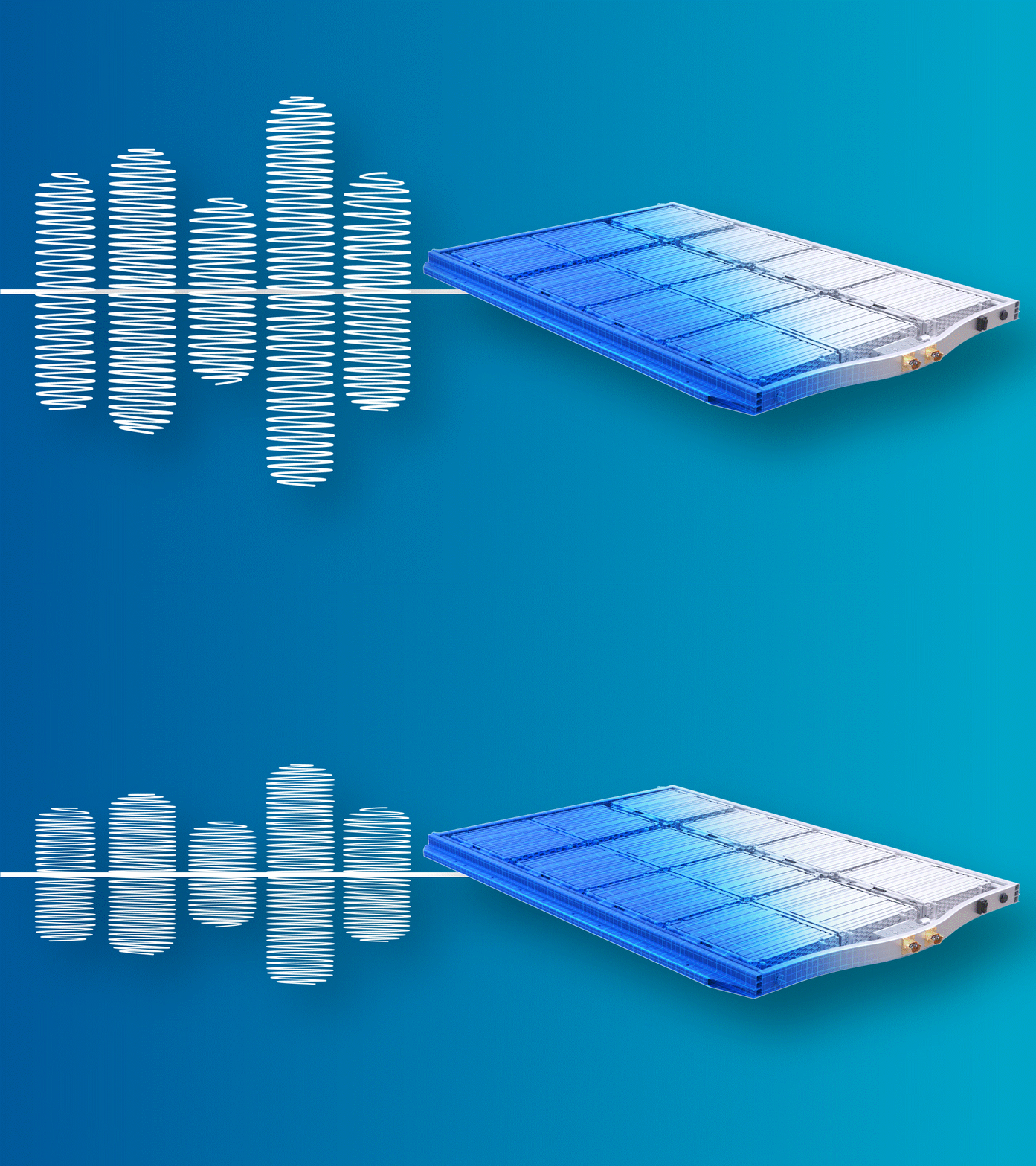
In the third edition of this series, we will dive into one of the major technology drivers for the automotive industry – battery technology. Our experts present solutions that break the boundaries of conventional battery design.
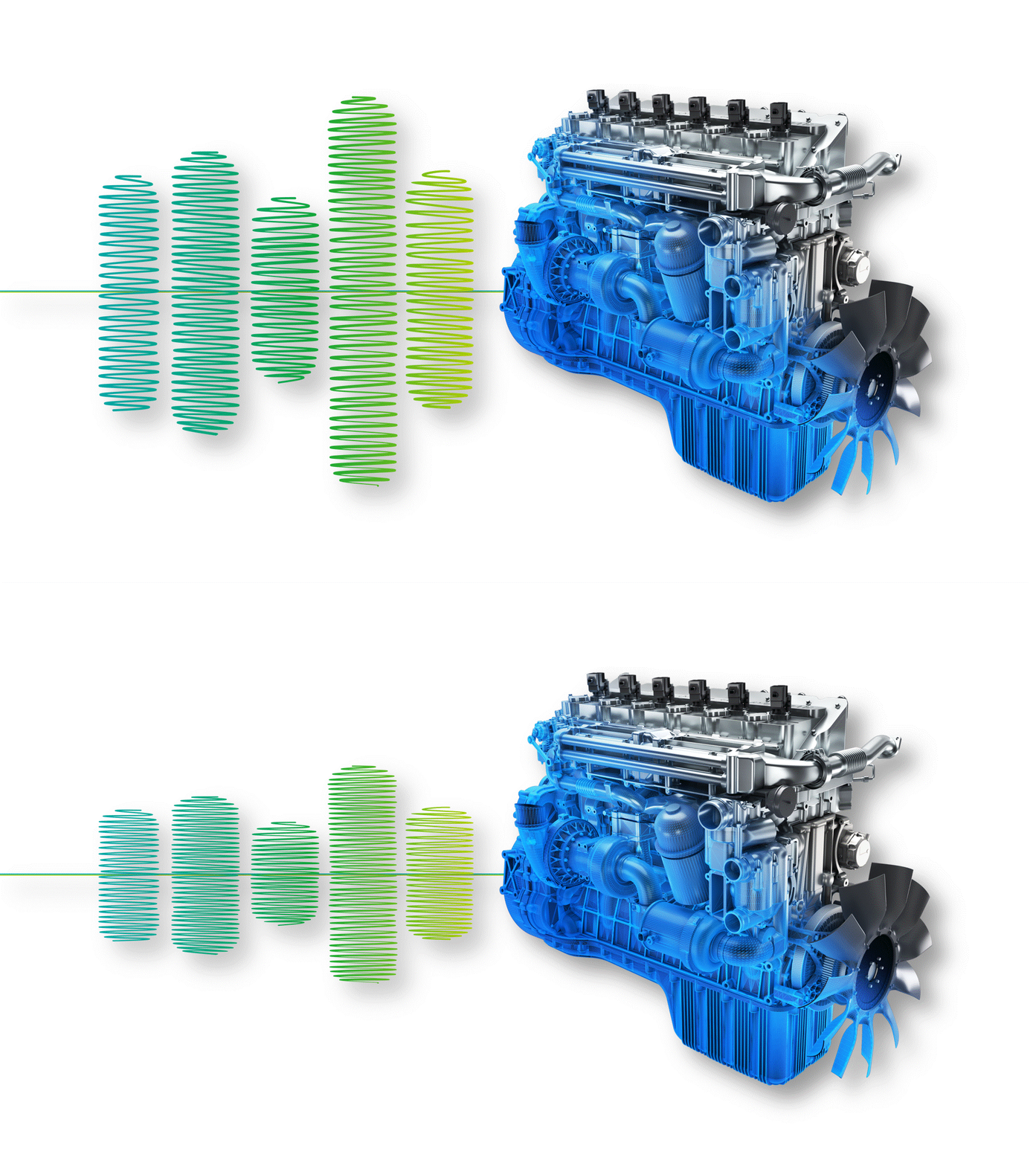
The focus of this part of our event series is on the promising potential of alternative fuels for combustion engines. Green hydrogen and ammonia, for example, enable mobility in sectors that are difficult to electrify and at the same time significantly reduce greenhouse gas and pollutant emissions.
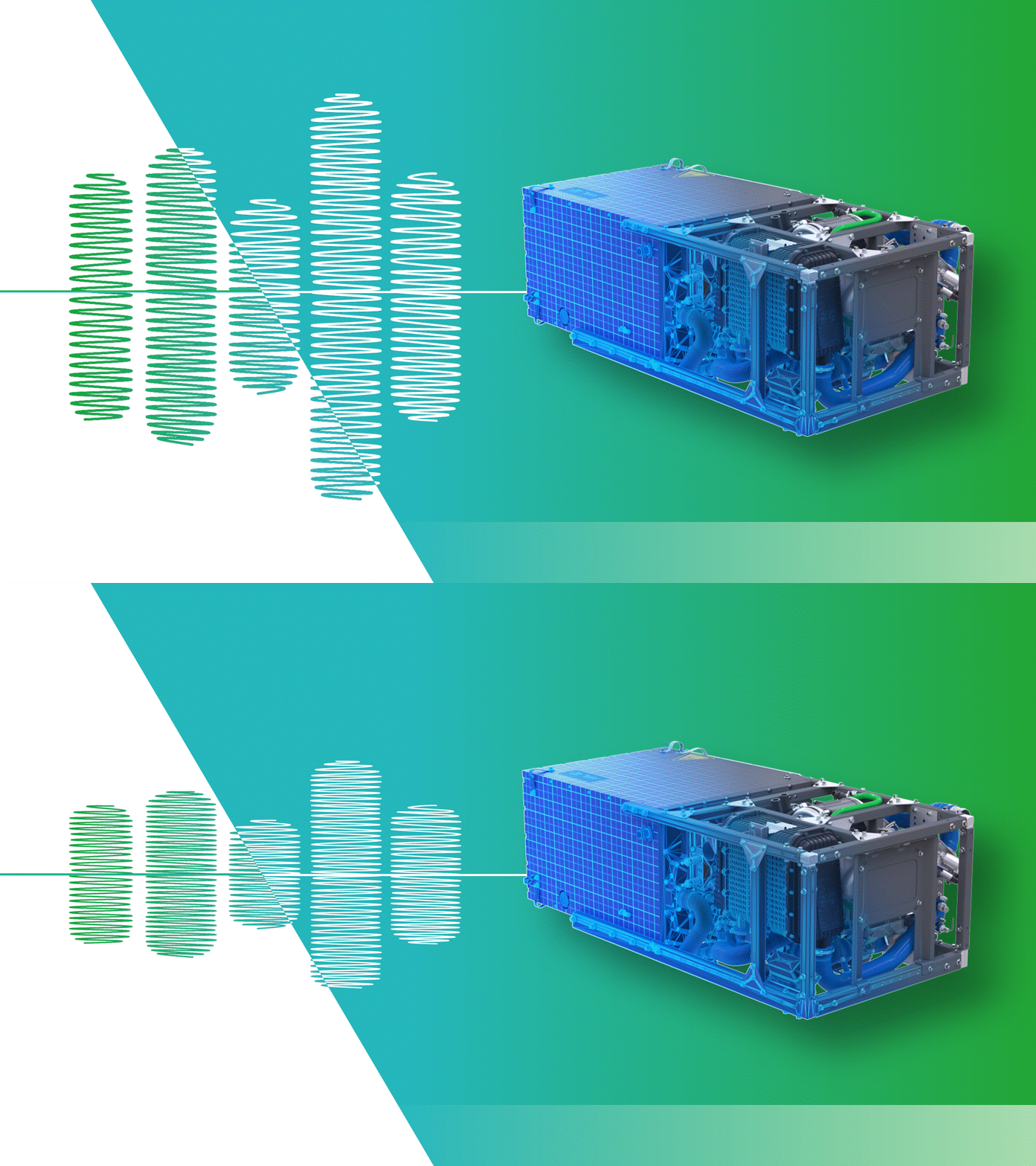
SIMpulse stands for innovative insight into the ever-evolving landscape of simulation technology. Experience a dynamic showcase spotlighting the diverse facets of simulation applications, from automotive design to energy optimization and beyond.