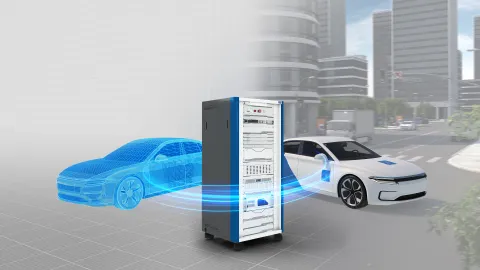
Hardware-in-the-Loop (HiL) testing is critical as modern vehicles evolve into highly software-driven, complex, and interconnected systems. Traditional development and physical testing alone can no longer meet the growing demands for speed, safety, and efficiency faced by OEMs and suppliers.
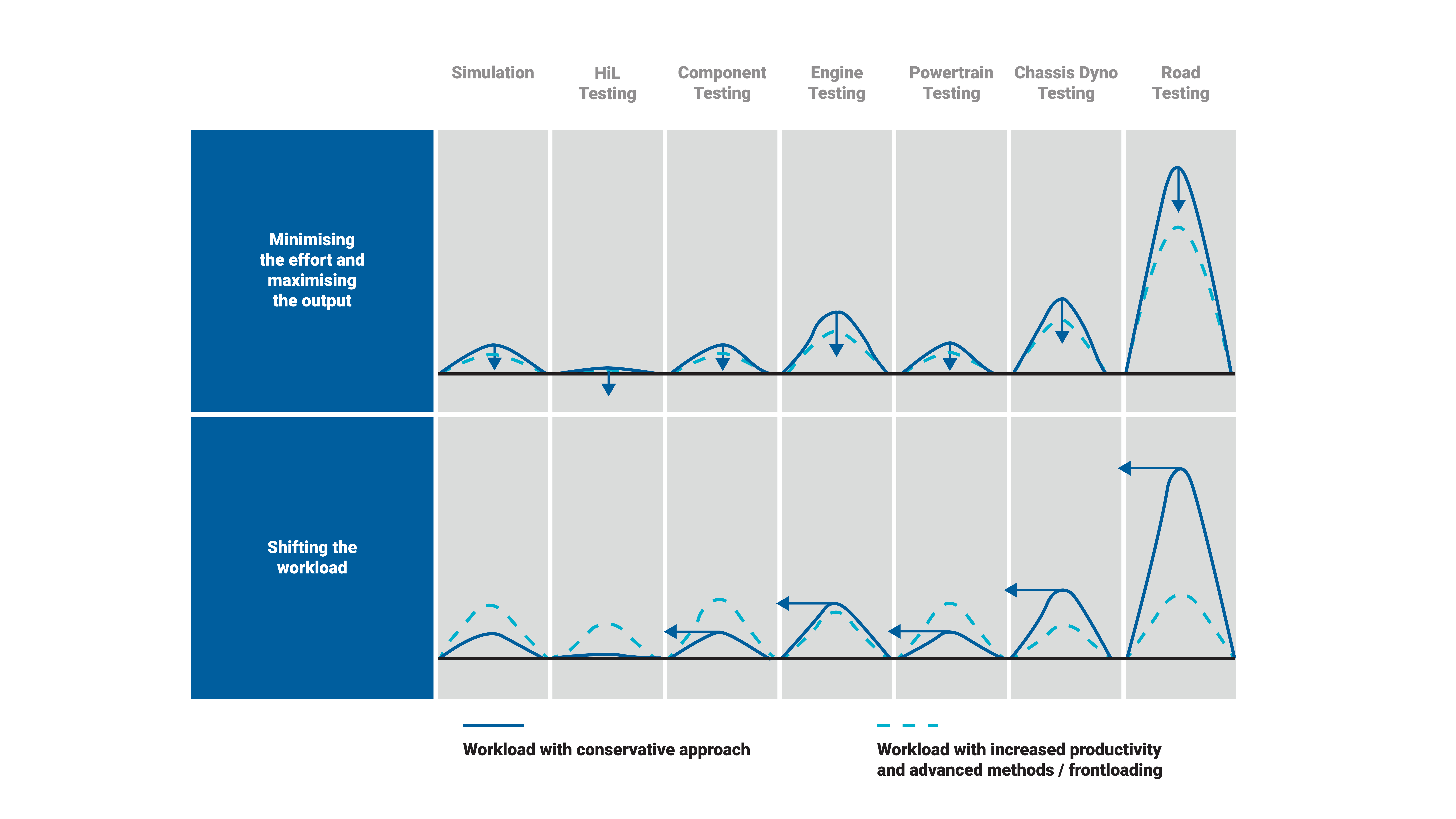
Vehicles are becoming more software‑defined and development must keep up adapt
Modern ECUs, zonal architectures, and EV powertrains require continuous software updates. HiL enables safe, repeatable, and fast validation of software long before a prototype vehicle exists.
Physical prototypes are too slow and too expensive
Building mule vehicles or hardware prototypes is costly and delays development. HiL allows teams to test thousands of scenarios virtually at a fraction of the cost.
Real‑world testing cannot cover all scenarios
Many failure cases are dangerous, rare, or impossible to reproduce physically. HiL safely emulates faults, edge cases, and extreme conditions, ensuring robust ECU behaviour.
Faster software cycles need automation and continuous testing
CI/CD, nightly builds, and over‑the‑air updates require non-stop verification. HiL systems are the backbone of automated test factories, enabling round‑the‑clock validation.
Thanks to the universal I/O board, which supports a wide range of signal types (such as digital and analog inputs and outputs), the system offers maximum flexibility while reducing overall complexity. This enables a scalable architecture that can be easily adapted to different applications and future requirements.
Preconfigured system variants as well as specialized hardware modules are available for domain-specific applications and the integration of external components – providing an ideal starting point that can be flexibly tailored to individual project needs:
- Standard
- eDrive
- Battery
- Customized
In addition, AVL software solutions enhance the platform with powerful capabilities for real-time simulation, calibration, and validation – from individual components to full vehicle testing.
|
Built for the Future of Vehicle Development
Designed for software-defined-vehicles (SDV) and next generation E/E architectures, enabling cluster-based HiL testing, multi-domain control, multi-user operation, and secure remote access.
Cost Efficient without Compromise
Significantly lower total cost compared to market leading HiL solutions – without compromising quality, performance, or reliability.
Open
Ecosystem
Open, interoperable, and tool-neutral to ensure flexibility, scalability, and long- term investment protection.
Global Presence, Local Expertise
Globally consistent HiL-strategies combined with local engineering presence, deployment support, and long-term lifecycle services in key customer regions.
Flexible & Scalable I/O Architecture
The system uses multifunction I/O cards capable of generating and measuring analog, digital, PWM, and other signals within one module. Unlike other solutions on the market which need separate cards, AVL supports use on the same card. This reduces hardware complexity and allows easy adaptation to different tests.
Scalable Multi-HiL Clustering
Multiple location-independend HiL systems – such as powertrain and battery – can be connected and used together as one coordinated setup. A single user can access several HiLs at once, enabling full‑vehicle or multi‑domain validation. This makes it possible to scale testing as ECU and system complexity grow.
Parallel Multi-Team Use
AVL’s HiL architecture empowers modeling, testing, and calibration teams to collaborate on a single system simultaneously. By enabling parallel access, the platform eliminates handover delays and ensures development continues without inter-departmental dependencies. Its future ready architecture supports Software-Defined Vehicle (SDV) validation, making it fully compatible with CI/CD pipelines and automated test factories.

With our HiL Solutions we target end-to-end approaches that radically speed up software release cycles and E/E integration, offering a new benchmark for testing efficiency and development agility.
– Halil Ziya Ahmed, Product Manager
AVL Nexus HiL™ - Solution Sheet
Download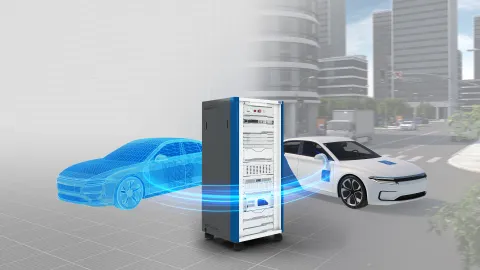
Automotive validation often spans multiple environments – Software-in-the-Loop, Hardware-in-the-Loop, and real-vehicle testing – but moving tests, models, and data between them is rarely straightforward.