
The challenge in power electronics validation lies in managing an expanding test scope while dealing with physical dependencies and limited test capacity. Critical behavior cannot always be validated early enough at real electrical power levels, while testing often relies on connected components or complete system environments.
Additionally, the increasing interaction between hardware and software makes failures harder to isolate, and physical setups can restrict the reproducible testing of operating points, edge cases, and fault scenarios. This puts additional pressure on available testbeds, prototypes and engineering resources.

The solution is to frontload power electronics validation by shifting relevant testing to earlier development stages and to the electrical power level. This allows critical hardware and software behavior to be evaluated before complete mechanical test environments are available.
AVL’s modular emulation technology supports different electrical roles, operating ranges and levels of emulation. This enables functional testing across operating points, parameter variations, motor concepts and com-ponent tolerances without requiring physical loads for every validation task.

Emulation enables controlled testing across a wide range of electrical operating conditions, load scenarios and fault cases. Combined with automated test execution, it reduces repetitive setup effort, improves consistency and helps use available test time more effectively.
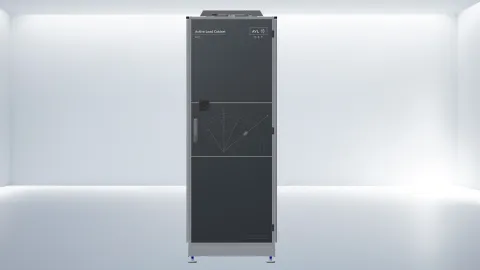
Not every validation task requires the same level of fidelity. A test-objective-driven approach selects the appropriate test environment for each task – from targeted active-load testing with the AVL Active Load Cabinet™ to high-fidelity Power Hardware-in-the-Loop emulation with the AVL Inverter TS™ – while maintaining relevant electrical operating conditions.

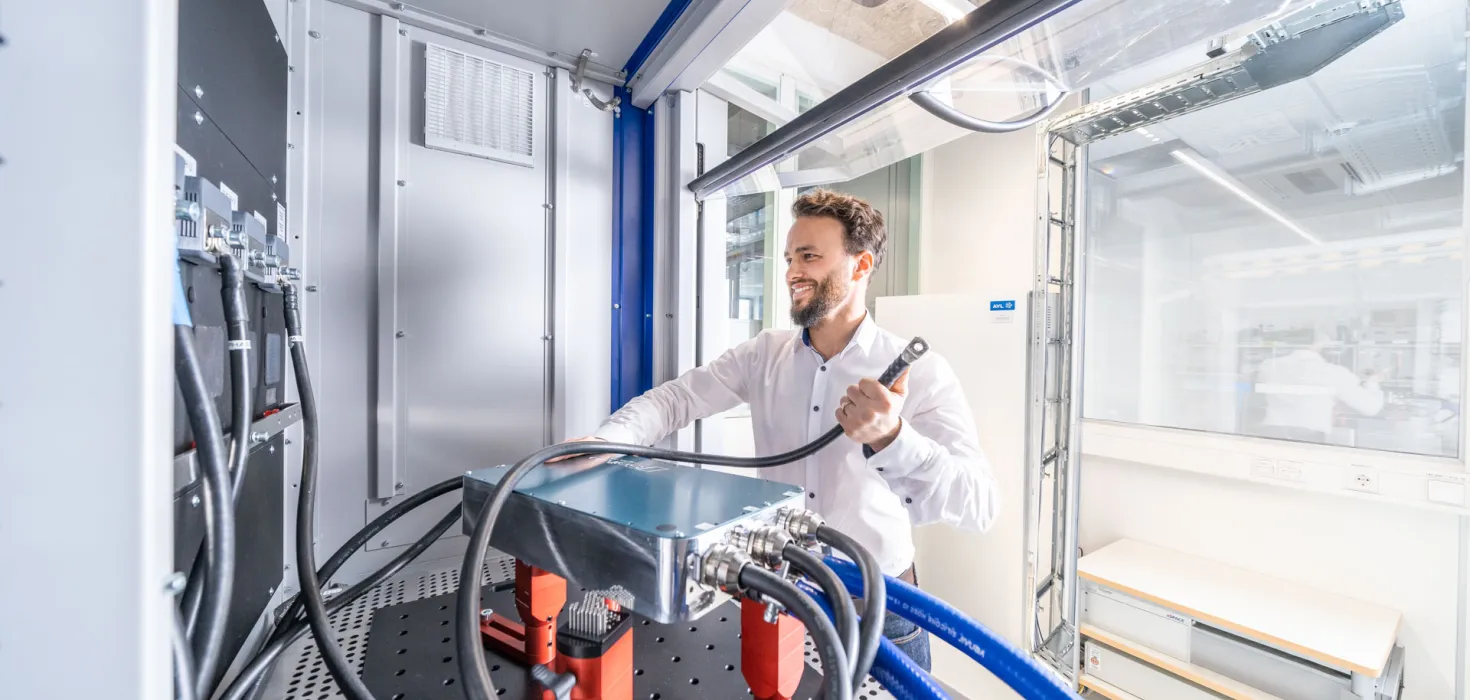
AVL combines in-house developed emulation technology with extensive application and system expertise in power electronics testing. By the end of 2025, 59 MW of Power-HiL capacity had been installed, providing extensive experience in implementing powerful and scalable electrical test environments.
From test concept and system configuration to commissioning, operation and service, customers can draw on AVL’s global engineering and support network throughout the test system lifecycle.
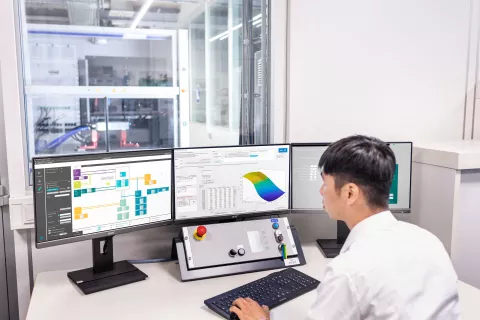
AVL PUMA 2™ Inverter features an intuitive user interface displaying all important values immediately. You can easily integrate the automation software into existing AVL test fields, allowing data to be shared across different testbed types and configurations. Our complete integrated solution covers all inverter testing requirements that arise from automation, limit monitoring and measurement, leading to the most efficient inverter testbed operation.

It is important to us to provide our customers not just with individual parts, but with a state-of-the-art, complete test system that is based on years of application know-how and thus enables our customers to use a highly efficient test methodology.”
– Dr. Tobias Schelter, Managing Director, AVL SET GmbH
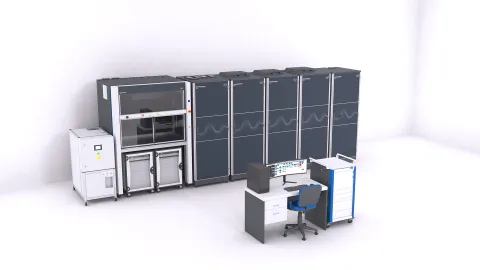
Validate inverter hardware and software independently of a physical e-motor under real electrical power conditions. AVL Inverter TS™ enables precise, repeatable e-motor emulation for earlier and more efficient inverter validation.
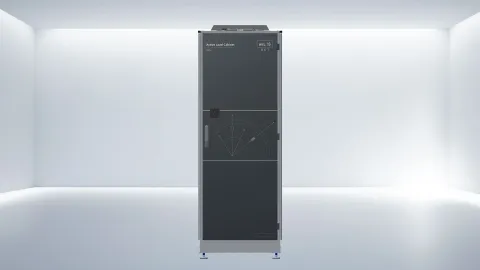
Validate high-voltage inverter hardware early in development under relevant electrical load conditions. The AVL Active Load Cabinet™ enables flexible functional testing at real electrical power levels.
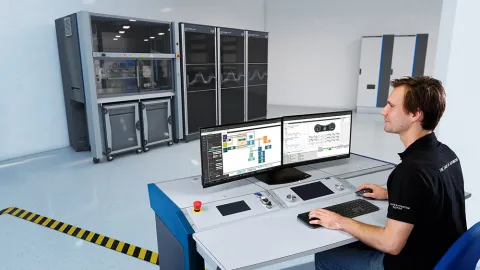
AVL PUMA 2™ Inverter is a comprehensive automation system for inverter testing, offering everything you need in one place

The AVL X-ion™ PA2 power analyzer is a modular data acquisition platform that is optimized for electric and hybrid applications.
AVL’s comprehensive worldwide network of experts allows best customer vicinity, ensuring consistent and connecting testing fields globally. Wherever your R&D challenges take you, we are always close at hand, ready to provide the service you need.

> 70
years of experience
> 5,000
employees worldwide for testing solutions
> 30
countries covered by the global network
> 7,000
testbeds installed worldwide
> 80
turnkey projects
Modern tools are improving the historical methods used to develop and validate traction inverters. What was once a time-consuming and expensive testing process on various dynos, vehicles, and passive loads has been shortened and improved with new tools and methods.

In this free webinar, our experts Benjamin Kanya and Christian Mayr will show you the benefits of frontloading inverter calibration. They will take a look at the entire calibration process, from basic calibration to in-vehicle validation.

In this webinar a game-changing test environment is presented where the battery and e-motor are replaced with emulators, which are controlled from a powerful automation system.

