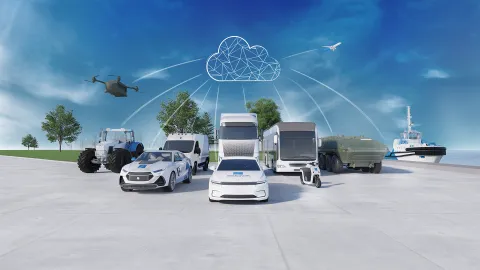
SDV platforms span powertrain, ADAS, body, connectivity, and more — each domain evolving at software speed. Validation, compliance, and regulatory readiness must keep pace: from the first commit to the last field update.
A lifecycle-oriented approach connects development, testing, and compliance into a single, consistent system - ensuring transparency and control from early development through the start of production to in-field operation.

Software-defined vehicles require architectures that can handle continuous change across functions, domains, and updates. Traditional system structures often lack the consistency needed to maintain traceability between requirements, implementation, and validation as complexity increases.
At the same time, regulatory requirements are becoming more detailed and dynamic. If they are not clearly interpreted and embedded early, they introduce inconsistencies, rework, and delays later in the process.
A structured approach to requirements and system design – combined with early integration of regulatory interpretation, safety, and cyber security considerations – helps establish a stable foundation for scalable development.
Frequent software updates and rapid iteration cycles require validation processes that can keep pace. In many environments, these processes are still manually triggered, partially automated, or disconnected from development workflows, leading to delays and limited feedback.
As a result, changes are often assessed too late, and scaling validation effort requires additional resources rather than improved efficiency. This becomes a bottleneck as release frequency increases.
Event-driven automation and DevOps-based pipelines enable continuous execution of validation activities, including virtual calibration, ensuring that every change is verified quickly and consistently without manual intervention.
Verification and validation are often spread across virtual and physical environments, leading to fragmented test setups, duplicated effort, and inconsistent results. As system complexity grows across all vehicle domains, ensuring comparable and reliable results becomes increasingly difficult.
A unified approach enables test cases and configurations to be defined once and executed consistently across different environments. By connecting simulation and hardware-based testing through integrated workflows, verification can scale efficiently without redundancy or loss of consistency.
Regulatory requirements, safety standards, and cybersecurity expectations are increasing both in scope and complexity. In many cases, compliance evidence is still compiled retrospectively, making it difficult to ensure completeness, consistency, and auditability.
Without end-to-end traceability, compliance becomes a last-minute scramble: expensive, error-prone, and never audit-ready. Embedding compliance into daily workflows – through continuous safety and cybersecurity monitoring, integrated evidence generation, and a structured approach to homologation - enables a transparent, reliable path from requirement to approved release.

High complexity and shorter update cycles? Our solution uses automated pipelines to reduce testing time by up to 40 %. And this is just the beginning!
- Harald Petschnik, Business Innovation Manager, AVL
AVL connects development, testing, and compliance through integrated workflows built for software-defined vehicles. By combining automated processes, connected toolchains, and unified environments across SiL, HiL, and proving ground testing, AVL helps reduce bottlenecks, maintain traceability, and generate continuous evidence from development through in-field operation.
- Connected workflows from development to in-field operation
- Unified execution across SiL, HiL, and real-world environments
- Automated processes integrated into development pipelines
- End-to-end traceability from requirements to release
- Integrated support for safety, cybersecurity, SOTIF, and homologation
- Audit-ready evidence generation for release and compliance readiness


SCENIUS is a holistic solution for scenario-based ADAS and AD safety testing and validation.

AVL CAMEO 5™ unlocks a new maturity level of calibration and validation in automotive software testing.

Experience real-world simulations in miscellaneous testing and calibration environments like Software-in-the-Loop (SiL), Hardware-in-the-Loop (HiL), testbeds and vehicles.

CRETA is a calibration data lifecycle management system designed for the calibration of all vehicle control units.
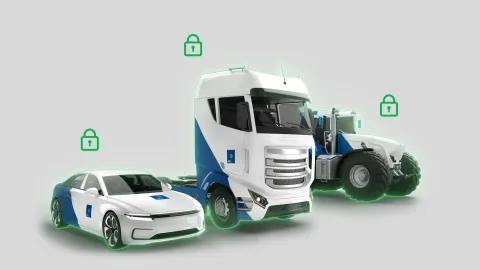
AVL supports OEMs, their suppliers and certification bodies with consulting, testing and engineering services as well as dedicated tools covering the complete cyber security lifecycle.

AVL Virtual Studio is a modular, real‑time virtualization platform that standardizes simulation workflows, improves system‑level integration, and enhances efficiency across SIL, HIL, and testbed environments.

From Validation to Continuous Compliance in the SDV Era
Highlights
Moving steadily into the future: Find out what’s brand new in the field of connecting solutions.
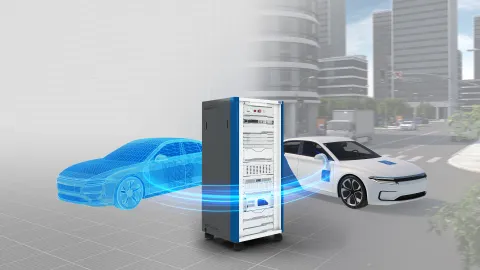
Automotive validation often spans multiple environments – Software-in-the-Loop, Hardware-in-the-Loop, and real-vehicle testing – but moving tests, models, and data between them is rarely straightforward.

In this webinar, we will show how software validation is being reimagined using workflow automation and DevOps principles – across all test levels: from Software-in-the-Loop (SiL) to Hardware-in-the-Loop (HiL) and test bench validation.
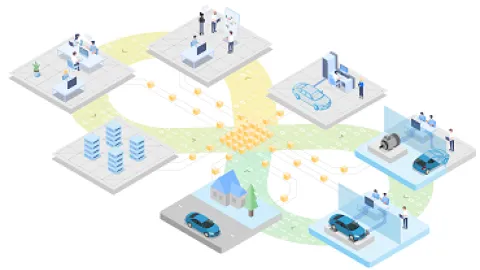
The software industry has shown that DevOps approaches offer many advantages, including faster value chain and time to market, additional business models, and quick and frequent updates to improve the customer experience.