To meet the demands of the evolving electric vehicle battery testing landscape, EV and battery manufacturers, as well as cell suppliers, must continuously innovate. Accurate battery cell and battery pack testing is essential for optimizing capacity, performance, current, and voltage behavior. As battery technologies advance, validation systems must continuously evolve while maintaining high test quality, data integrity, efficiency, and compliance with accreditation and cybersecurity standards under increasing time pressure.
From battery cell testing equipment to fully integrated battery pack test systems and complete battery test facilities, we provide software, hardware, and automation combined with engineering support for reliable and scalable battery validation across all development stages.
Testing Battery Cells
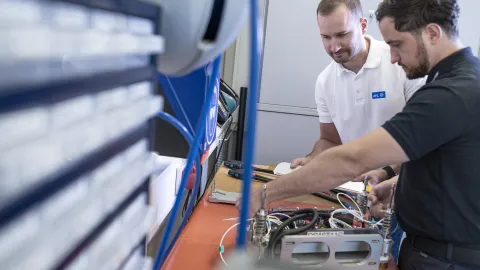
A battery cell testing system is designed for precise validation of lithium-ion and next-generation battery cells under controlled environmental conditions. These systems typically include temperature chambers with safety features, high-performance and cost-efficient battery cyclers, and automation systems to simulate real-world operating scenarios.
The configuration of each battery test system depends on the cell format and required current and voltage ranges. Advanced safety features and environmental controls ensure reliable battery safety testing, including critical scenarios such as thermal behavior and durability.
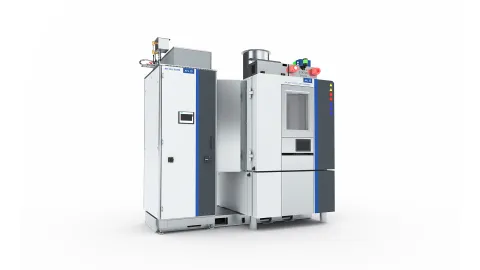
Our AVL Battery Cell TS™ supports fully automated battery testing workflows, integrating additional technologies such as Electrochemical Impedance Spectroscopy (EIS) for deeper analysis. Its robust software backbone is designed to manage standard testing requirements to large-scale battery testing laboratories with thousands of channels, enabling efficient validation processes and high-throughput battery development.
Testing Battery Modules and Packs
To meet the demands of the evolving mobility market, EV manufacturers and battery suppliers must continuously advance battery pack testing. For electric vehicles in particular, driving range and performance depend heavily on the accurate validation of battery capacity, current, and voltage at the module and pack levels.
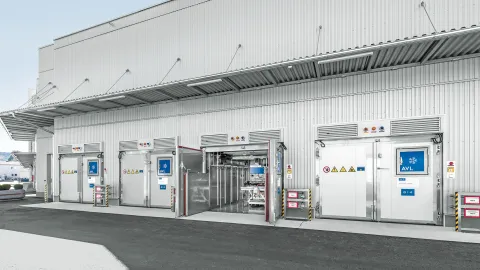
Our battery module and battery pack testing solutions include modular and containerized battery test systems designed for flexible deployment. These systems support comprehensive batteries testing, measuring critical parameters under diverse environmental and load conditions.
With advanced interfaces and the ability to seamlessly integrate additional battery testing equipment, our platforms enable efficient, scalable validation processes. By combining customer-focused engineering services with innovative battery testing solutions, AVL delivers a complete approach to battery testing, from development to full battery test facility implementation.
Master
Complexity
As battery chemistries evolve and new architectures emerge, such as C2B, C2V, and C2C, AVL provides an end-to-end, future-proof test environment that transforms testing into a reliable decision-making process.
Accelerate Time-to-Market
AVL enables teams to overcome manual work, fragmented toolchains, and slow setups through intelligent automation, rapid system setup, and predefined test cycles that compress development timelines. With global service coverage and integrated workflows AVL ensures stable operation, faster decisions, and fewer iteration loops.
Maximize Utilization. Minimize Cost.
AVL provides a flexible, long‑life test platform with shared, multi‑purpose equipment that keeps utilization high and operating costs predictable. With expert guidance, remote support, predictive maintenance, and workflow templates based on global OEM experience, teams can work more efficiently, avoid bottlenecks, and scale their operations with confidence.
Global
Expertise
AVL equips your team with the right setup, remote support, and predictive maintenance to ensure confident, efficient operation from day one. Leveraging global OEM project experience, our workflow templates accelerate onboarding and reduce operational risk.
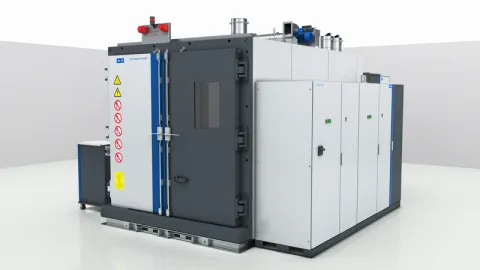
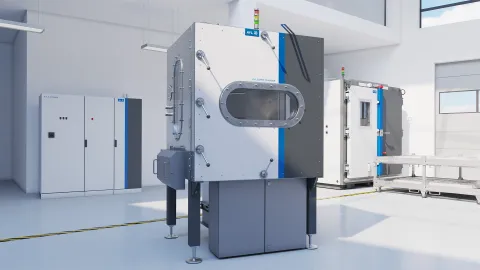
At the heart of our battery safety strategy are the AVL Safety Chamber and the AVL Autoclave. This state-of-the-art, modular testing system is designed to perform rigorous battery abuse testing on cells and cell stacks. It ensures that batteries can withstand the harshest conditions they may face in real-world applications.
Partner with us to future-proof your battery technologies with industry-leading safety testing solutions for packs and modules.

How can the time to market for new batteries and electric vehicles be reduced? AVL’s software backbone is designed to simplify and improve testing operations by automating tasks, reducing errors and accelerating processes. It represents AVL Battery Testing primary source of value by seamlessly connecting test execution, data management, simulation, and analytics within a single digital framework.
Automated test libraries, test optimization via virtualization for faster and more reliable results, and advanced data analytics using AI, and web‑based applications for remote access to individual testbeds and entire test fields ensure a consistent correlation between physical testing and simulation. This reduces reliance on hardware iteration, accelerates confident decision‑making, and sustains trust in results across all validation stages.
Testing the Integration of High-Voltage Components
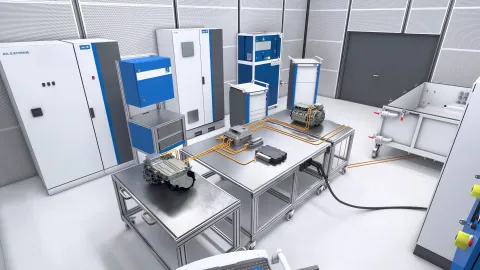
High-voltage systems are complex and dangerous if not properly designed and tested. The AVL HV System TS™ E-Integration provides a safe environment to test HV systems, which helps to prevent accidents and injuries. Besides that, cost-effectiveness is very important. Testing HV systems in a real-world environment can be expensive, time-consuming, and risky. The AVL HV System testbed provides a cost-effective way, without the need of a chassis dyno, to test HV systems before they are implemented in vehicles, which can help to reduce development time and costs.
Testing the Charging and Discharging of Electric Vehicles
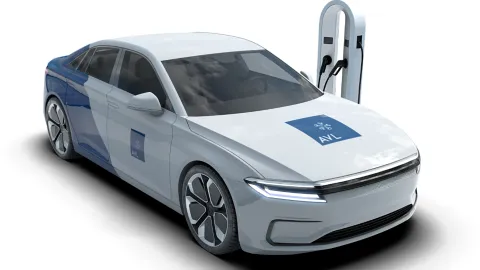
New charging standards and norms regarding connections, communication, safety, etc. had to be established between OEMs and the industry in recent years. It is desirable to move charging test activities to a controlled test environment to reduce test costs, accelerate development, improve V&V, and enhance quality and customer experience. Simulated charging enables testing of various communication protocols as well as misuse or failures/ malfunctions of charging stations. For AC charging, different mains supplies can be tested depending on the region, e.g. JP, US and EU.

When it comes to batteries, there are countless opportunities to find the right development partners and manufacturers. Here, nuances decide to prevail in the market. As a globally positioned company with knowledge from battery development, simulation and production, AVL is the reliable and competent partner in the field of test systems for batteries.”
– Reinhold Hetzel, Global Business Unit Manager, AVL List GmbH
AVL Battery Testing Solutions – Brochure
Learn more about our holistic battery testing portfolio and solutions.
AVL E-Mobility Testing Solutions – Brochure
Tested and Trusted.
Battery Testing: Aviation – Solution Sheet
Boost your battery test process.
Tech Center Module – AVL Battery Pack TS™ – Solution Sheet
The fast track to battery testing excellence.
AVL Battery TS™ End Of Line – Solution Sheet
Success Story – “Battery Testing for Lilium eVTOL”
Expertise and test equipment for success in battery development.
Success Story – “Battery Testing for LABCO”
How AVL supported LABCO BTC in entering the world of battery development.
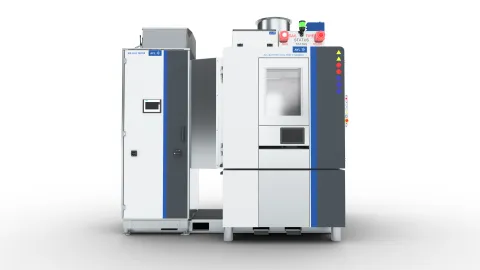
For battery cell testing, we offer complete test systems, stand-alone equipment, or even entire turnkey test labs.
Complete Battery Pack Test Systems From AVL
AVL offers complete test systems for battery pack testing – designed to meet the demands of modern e-mobility development.

The AVL Customer Services organization consists of more than 700 service- and application engineers worldwide, operating from more than 50 locations. Our global footprint is your local benefit.
In addition to the on-board charger and the battery itself, most control units are also involved in charging the battery. With increasingly connected vehicles, the vehicle will need to communicate with many different types of charging stations and, in the near future, even directly with the power grid (for load balancing).
The development of high voltage (HV) systems for electric and hybrid vehicles requires rigorous testing and validation to ensure safety and reliability. The HV system testbed is a specialized facility designed for this purpose, providing a controlled environment to evaluate the performance and behavior of HV systems under various conditions.
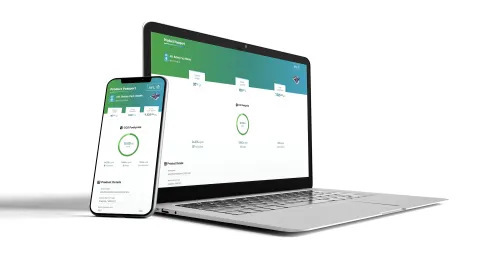
The only fully operational digital battery passport solution in a productive battery environment.
Battery test systems are integrated solutions that combine hardware, software, and automation to test battery cells, modules, and packs. These systems are essential for electric vehicle (EV) battery testing because they simulate real-world operating conditions, such as charging, discharging, and thermal stress.
AVL battery test systems enable the accurate measurement of performance, durability, and safety, reducing development time and ensuring compliance with evolving regulations and industry standards.
Modern battery testing solutions integrate safety-focused technologies, such as environmental chambers and abuse testing systems. These technologies enable controlled testing of battery safety, including exposure to extreme temperatures, overcharging, and failure simulation.
AVL Safety Chambers, for example, help evaluate how batteries behave under critical conditions, ensuring compliance with strict safety standards and minimizing risks in real-world applications.
A battery test facility combines multiple battery test systems and automation software to enable high-throughput testing. These facilities support thousands of test channels and enable parallel testing of battery cells, battery packs, and batteries.
Modern facilities improve efficiency, reduce time-to-market, and ensure consistent test quality across large development programs by integrating simulation, automation, and data analytics.
Lithium-ion battery testing includes multiple validation stages across the battery lifecycle:
- Battery cell testing: performance, durability aging, and electrochemical behavior
- Battery module and battery pack testing: system-level validation under load conditions
- Battery safety testing: abuse, thermal runaway, and environmental testing
- Battery validation testing: durability, efficiency, and lifecycle performance
AVL advanced battery testing equipment and automation systems are used to ensure accuracy and repeatability across all test scenarios.
The upcoming Euro 7 regulations will significantly increase the focus on durability, emissions, and lifecycle performance, including indirect aspects related to electrified vehicles. While Euro 7 primarily targets emissions, it also reinforces the need for:
- More robust battery validation testing over extended lifecycles
- Enhanced battery durability testing to ensure long-term performance
- Improved traceability (e.g., digital battery passport alignment)
- Stricter verification of energy efficiency and system reliability
To meet compliance requirements and demonstrate consistent performance over time, OEMs will need more advanced battery testing systems and facilities.
Thanks to AVL affiliates all over the world we are close to our customers with a global footprint. With our experience from different customer types, like battery, vehicle or energy storage manufacturers, we are able to continuously improve our test systems. New entrants as well as well experienced OEMs and Tier 1 and Tier 2 suppliers and test institutes rely on the support of the global AVL network. Our affiliates represent AVL directly on customer site.

> 200
project managers in Graz, and globally
> 50
battery testing projects per year worldwide
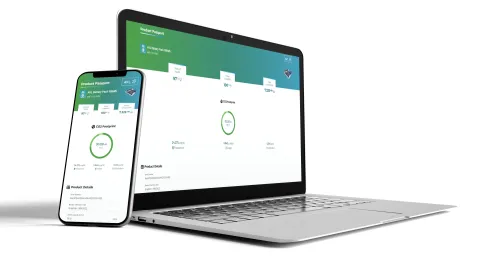

Battery electric vehicle (BEV) development requires significant adjustments to the development process and its environment.

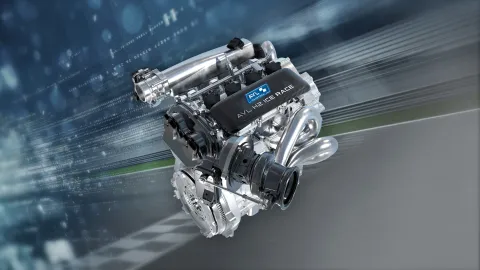
AVL RACETECH, the motorsport department of AVL, presents the prototype of an innovative H2 internal combustion engine. The power unit is a compact, hydrogen-powered 2-liter turbo engine, with intelligent water injection, which achieves a totally new performance level. The first racing engine that AVL RACETECH is developing and building in-house.